

UTHealth Houston Health Fair celebrates wellness at packet pickup

Photo by UTHealth Houston
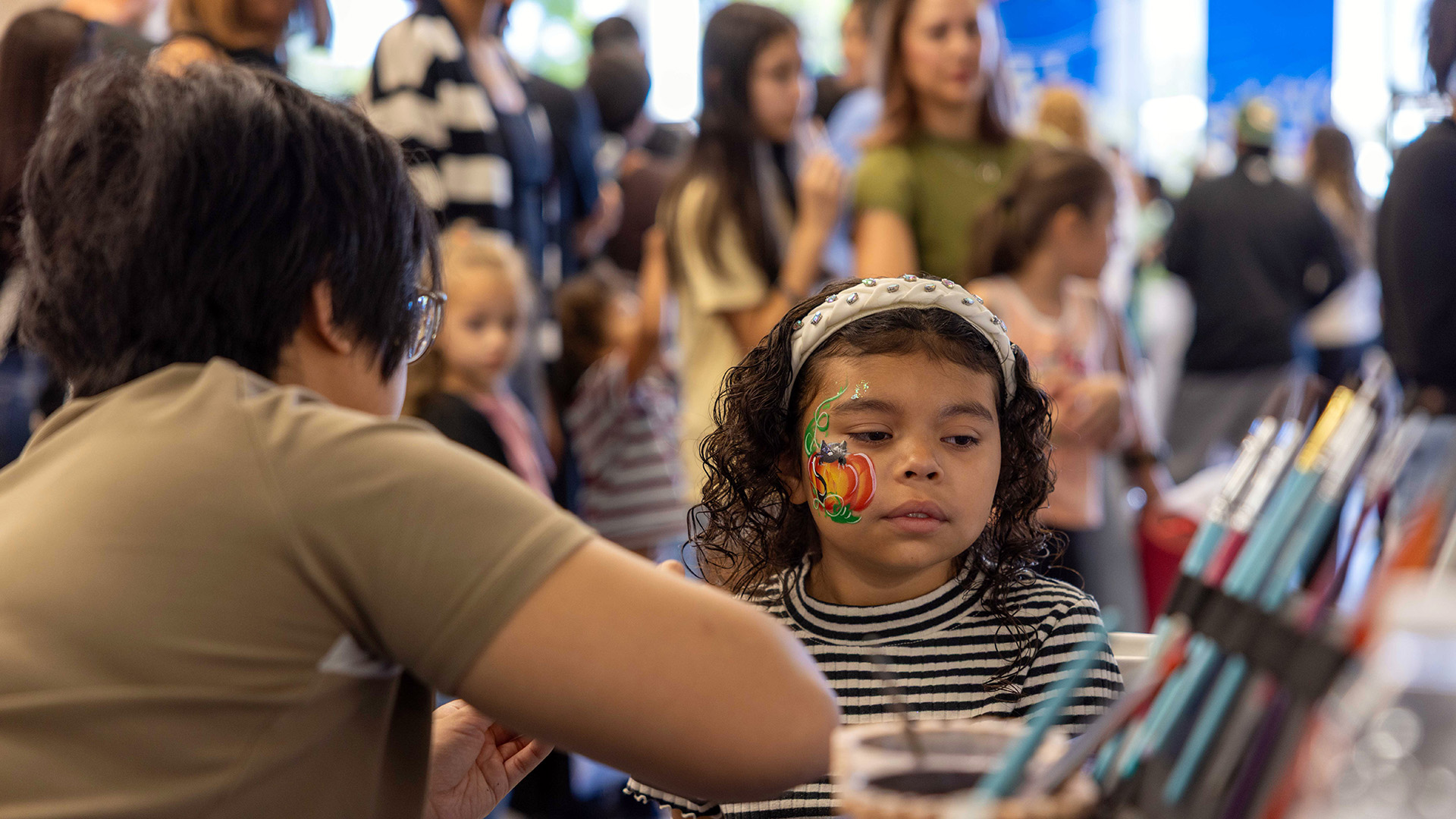
Children lined up for face painting while families collected spectator posters to encourage their runner on race day. The positive and high-energy environment at the UTHealth Houston Half Marathon & 10K Health Fair and packet pickup kicked off the excitement well before runners reached the starting line.
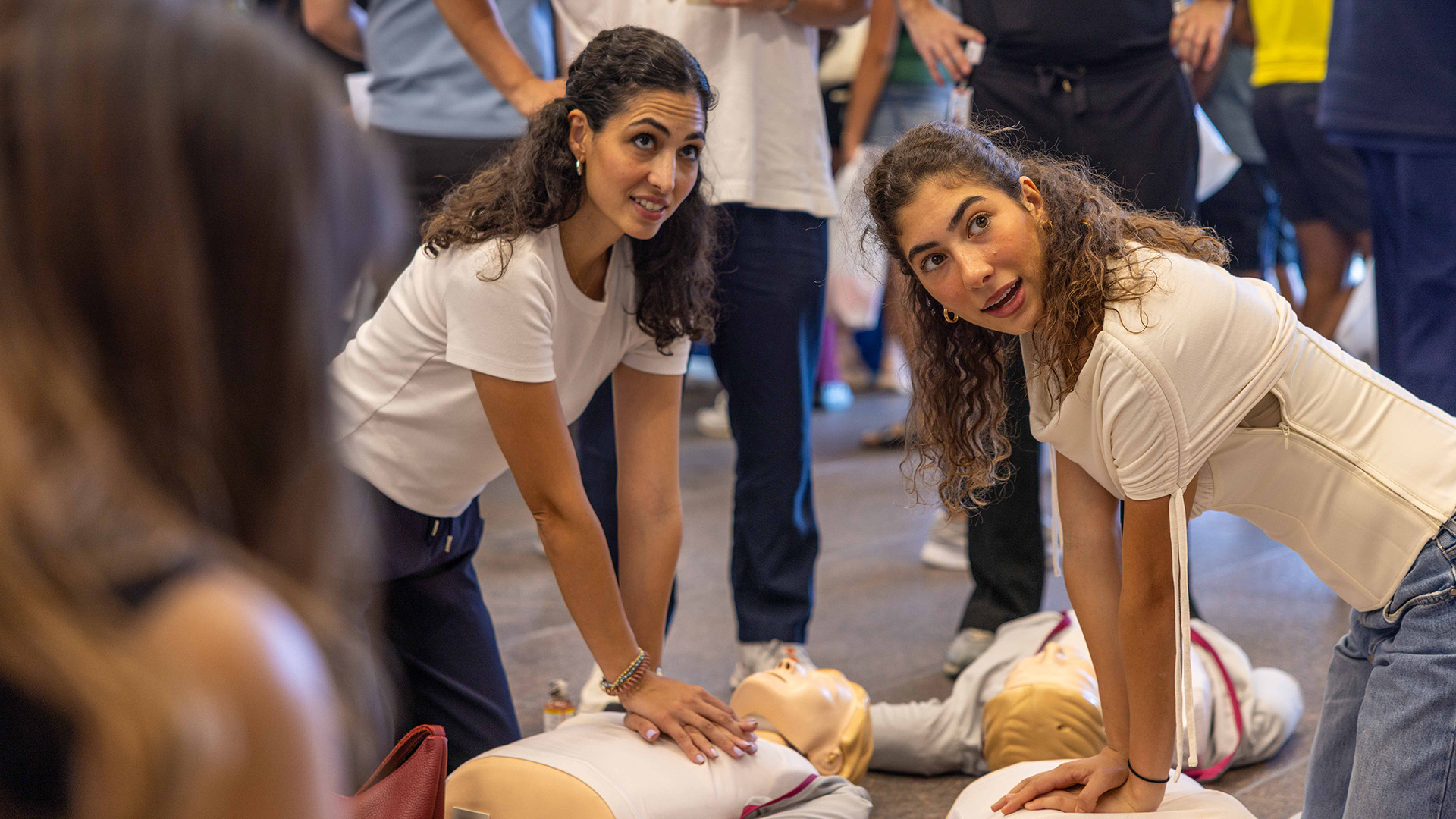
In its fourth year, the Health Fair welcomed 8,100 runners and families attending the race’s packet pickup Oct. 23–24 at Bellaire Station. The event offered something for every age—from no-cost health screenings and medical resources to playful moments with therapy dogs, live screen printing on tote bags, CPR training, kid-friendly games, and photo booth fun. Packet pickup transformed Bellaire Station into a community celebration of health and fitness, bringing together athletes and families where health education came to life.
Engaging the whole family
Sydnee Lucas, DNP, RN, brought her young children to the packet pickup, running the university’s half marathon for the first time. She had no idea the event would be so kid-friendly.
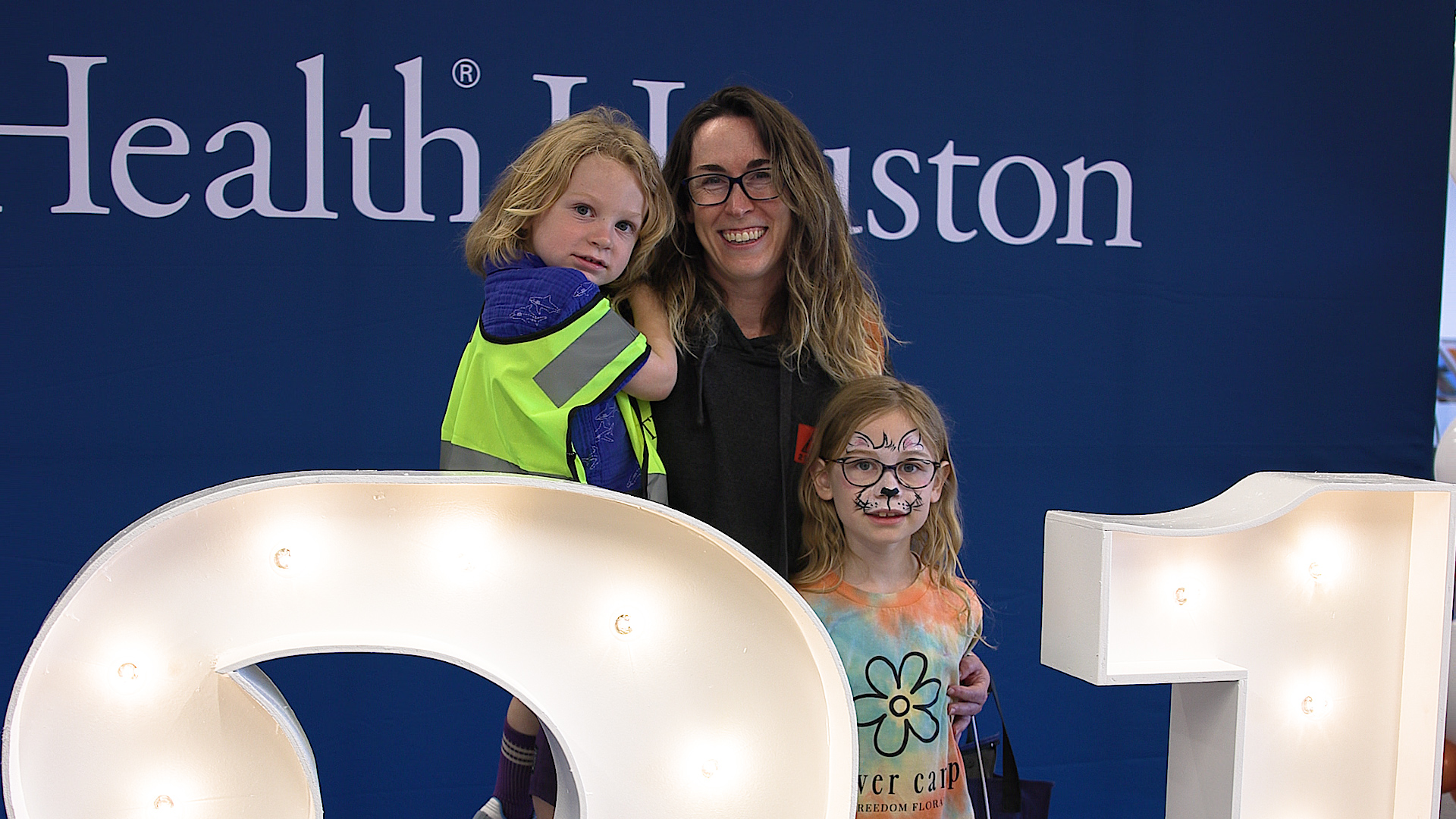
“I have a 4-year-old and a 7-year-old, and you never know what you’ll walk into,” said Lucas, assistant professor with Cizik School of Nursing at UTHealth Houston.
Her children enjoyed going from booth to booth. As a university employee, Lucas took the opportunity to talk to them about the different schools and services at UTHealth Houston. Her son proudly wore the safety vest he won at the Environmental Health and Safety booth by tossing germs into a biohazard waste bucket. Her daughter loved getting her face painted as a cat.
“The event is incredibly organized, a welcoming environment, and parking was easy,” Lucas said. “My daughter said, ‘This is more than a little fun, it IS fun.’”
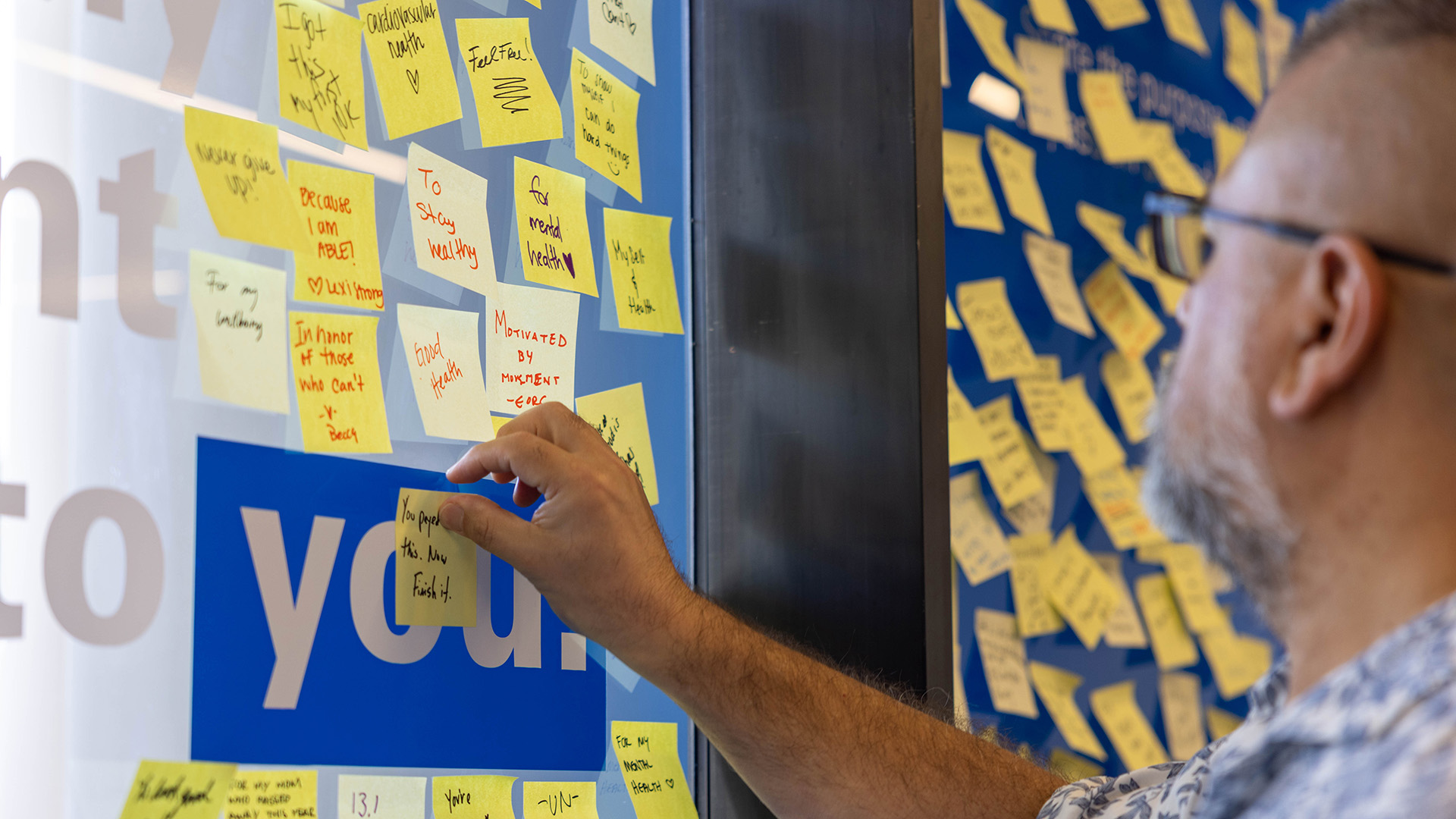
New this year, the “Why We Run” installation on glass windows encouraged runners to share the purpose, people, or passion behind their miles. Hundreds of sticky notes covered the glass by the end of the two-day event, sharing personal, and sometimes funny, reasons why they run:
- To chase my goals and stay healthy
- Mental health: I can and I will
- To live longer
- Making memories with my dad
- Because I can do hard things
Screening for preventive health
d assessments during the two-day Health Fair, emphasizing the importance of preventive care. In total, clinical staff provided more than 800 screenings and health services:
- EKG and carotid screening: 571
- Arterial screening: 36
- Skin check: 171
- Vision check: 30+
- Taping by an athletic trainer: 40–50
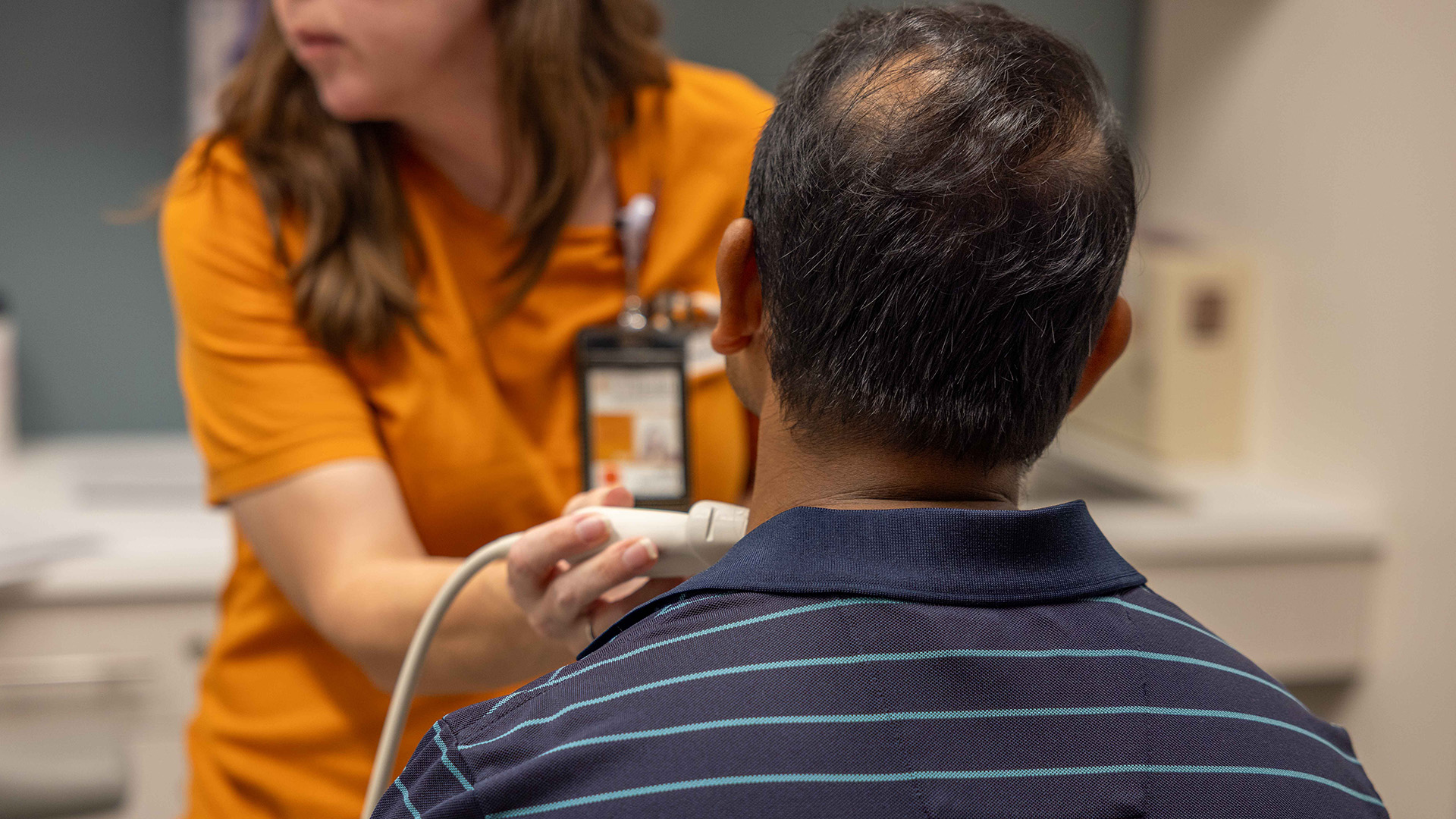
Participants could access a variety of no-cost health screenings anCarlos Castellano and his wife jumped at the chance to participate in no-cost screenings after learning about them at the Heart & Vascular booth. He signed up for the carotid screening and EKG.
“Something may be going on and you have no idea, so why not go ahead—especially if it’s free and convenient,” Castellano said. “It’s really the convenience.”
In his 10th year running the half marathon, Castellano usually attends packet pickup by himself and walks in and out without browsing the Health Fair.
“My wife was available today for the pickup, so we decided to go hang out together,” he said. “By taking the time to stop, slow down, and talk to people, we got information about colonoscopies and other valuable information.”
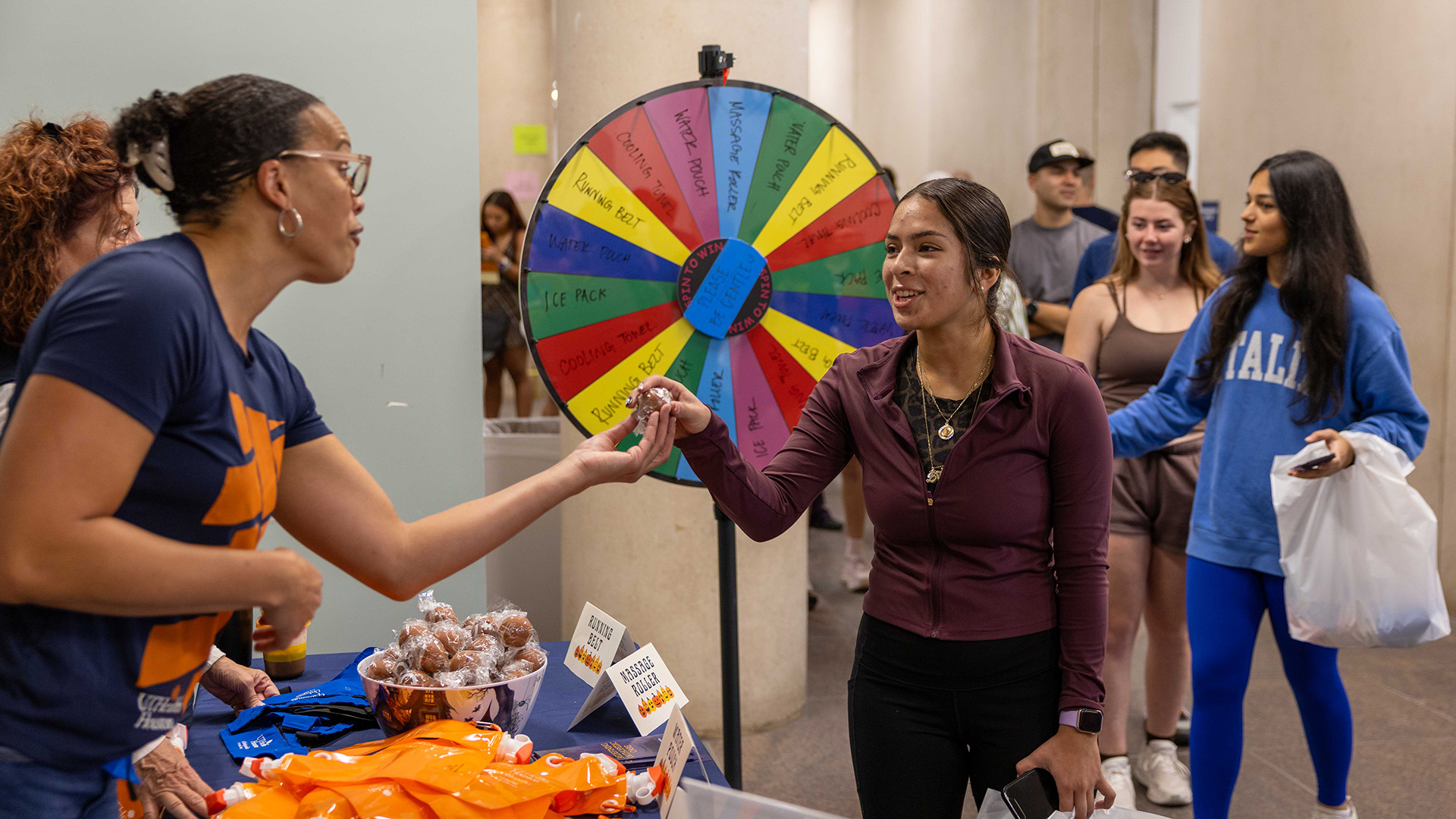
Dawit Gemechu, manager of cardiovascular imaging, was grateful for the opportunity to be involved again this year with the screenings.
“If our efforts help even one person identify a potentially serious condition before it leads to a catastrophic outcome, then our time and efforts are absolutely worthwhile,” Gemechu said.
This year, the screening results identified several people with abnormal EKGs and two abnormal arterial screenings. In past years, screening findings have led race participants to the emergency room for further evaluation, which thankfully caught conditions early. Otherwise, these conditions might have gone unnoticed.
“Stories like this really reinforce the value of what we do and remind us why these screenings are so important,” he said. “It’s always rewarding to be a part of an initiative that makes a difference in our community.”
Supporting the runners
For Harvey Beltford, waiting in line to get his knee taped by an athletic trainer was not a big deal—and a surprise bonus to the packet pickup. A runner since 2010, it’s not a service he’s seen before at other pre-race day running events.
“It’s valuable being able to have my knee taped the day before the run to relieve the pressure and tension while running,” he said. “I was in a motorcycle accident in 2014, and it’s been a journey getting back to running.”
Beltford found people at the Health Fair easygoing, pleasant, and not anxious like other running events.
Sally Croft, from New Zealand, is living in Houston for six months and experiencing her first big-scale race with the university-sponsored run. Croft appreciated the preventive view of health at the Health Fair. She took advantage of hydration tips for race day, electrolyte giveaways, sunblock, cooling towels, and good advice.
“When you’ve run for many years (I’m 67), I have problems if I slow down and don’t do it for a few days,” she said. “That’s when I get cramps and don’t sleep well. We’re designed to move.”
Her race events back home are just a few thousand people, and her training is in the backwoods running steep mountains.
“The Houston run is a little daunting, but I’m excited and looking forward to it,” Croft said. “It will be a good experience.”
Connecting with the community
Departments and schools across UTHealth Houston joined together sharing their services and resources in health education booths. For the Robert Cizik Eye Clinic in the ophthalmology department at McGovern Medical School, it’s important to get in front of runners and families at the Health Fair.
Ramona Singleton, assistant practice manager – patient services, said many people are afraid of going to the eye doctor, so their booth is a simple way to connect and do a vision screening onsite. Often, people realize their eyesight is not as bad as they imagined. Last year, a couple of screenings indicated high pressure, and people needed to see a doctor for glaucoma.
“This event brings the community together and helps people participate in eye health and be aware,” Singleton said. “The UTHealth Houston family has always been a close family, so it gets everyone more involved.”
By pairing preventive health resources with interactive activities, the Health Fair provided a welcoming space for families to connect with wellness, community, and race-weekend excitement before runners even hit the starting line.


