

Overview
Long-Read DNA Sequencing utilizes Oxford Nanopore Technologies' PromethION platform to sequence native genomic DNA without PCR amplification. The technology generates long sequencing reads that facilitate genome assembly, structural-variant detection, haplotype phasing, and analysis of repetitive genomic regions that are difficult to resolve using short-read sequencing methods. This service is well-suited for whole-genome sequencing, de novo assembly, methylation profiling, cancer genomics, and structural variation studies. The ability to directly analyze long DNA molecules provides improved genomic resolution and enables simultaneous investigation of genetic and epigenetic features.
Highlights
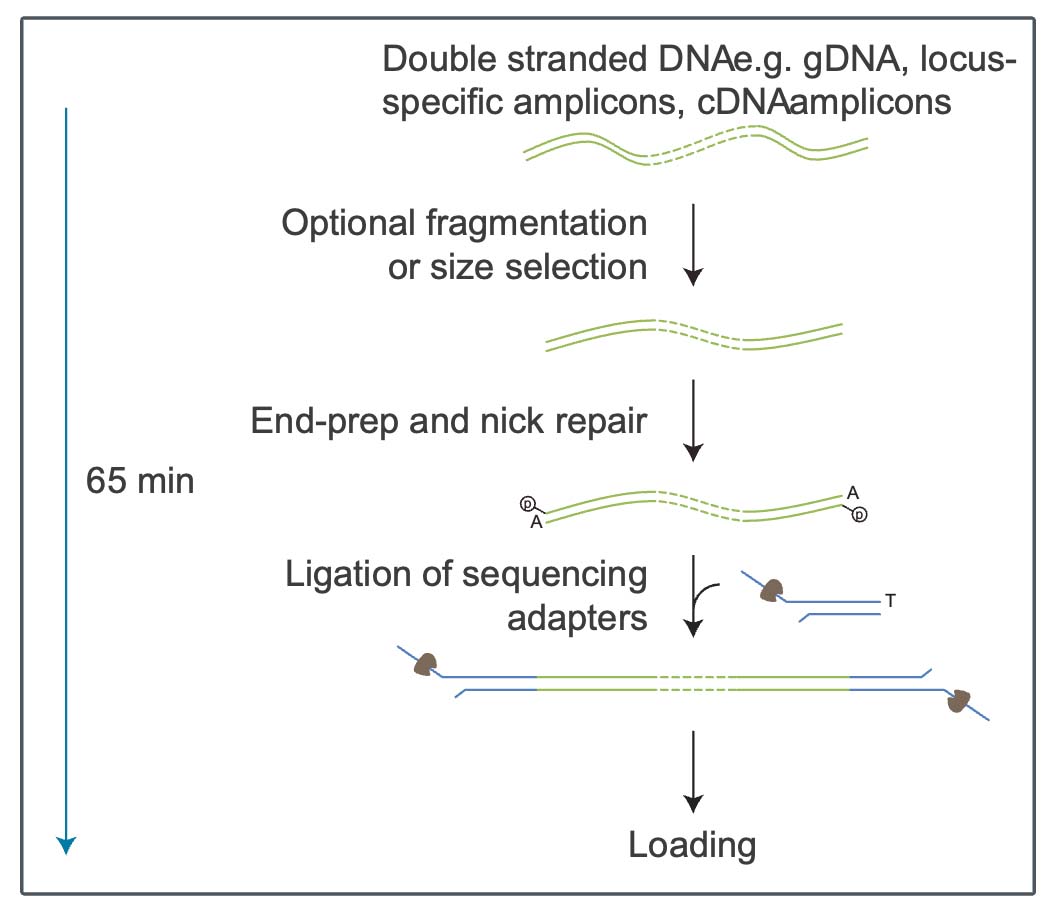
- PCR-free ligation-based library preparation for high-molecular-weight genomic DNA and amplicons.
- Direct detection of epigenetic modifications, including 5-methylcytosine (5mC), 5-hydroxymethylcytosine (5hmC), and N6-methyladenine (6mA).
- Long-read sequencing enables genome assembly, structural-variant discovery, repeat expansion analysis, and haplotype phasing.
- Optional fragmentation and size-selection workflows support a wide range of DNA input types and applications.
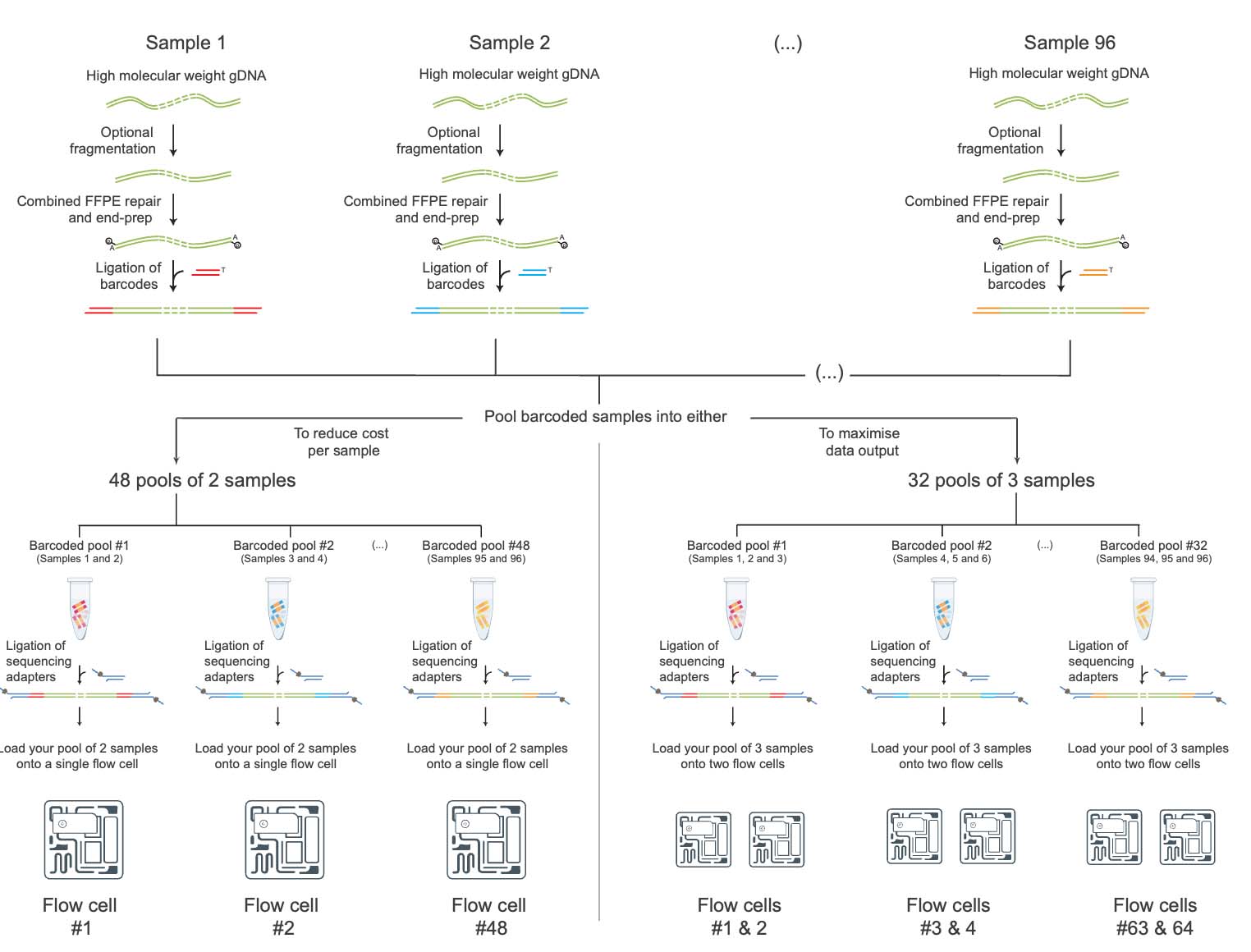
- Multiplexing of samples available (context-based).
- Real-time data acquisition and basecalling through MinKNOW, with downstream analysis supported through EPI2ME and custom bioinformatics pipelines.
Sample submission requirements
|
Service |
Sample |
Minimum amount |
Quality |
Fragmentation |
|
Direct DNA Sequencing (WGS) |
whole genomic DNA |
≥3 µg DNA |
A260/280 = 1.8–2.0; A260/230 > 2.0; minimal degradation; high molecular weight DNA preferred |
Range from 2 kb to 20 kb |
- Please provide samples in nuclease-free water. If any RNase is detected when running DNA chip in our Bioanalyzer 2100, the cost of cleaning up the contamination caused by RNase will be charged.
- Concentration must be measured by Qubit.
- The core has the right to determine whether submitted samples are qualified for the experiment.
- Please check the core ([email protected] or 713-500-7933) for more information.
Service workflow
Multiplexing service workflow
Data analysis
Downstream analysis can be performed using EPI2ME workflows designed for direct DNA data or custom bioinformatic pipelines.
Useful documents
- Original protocol: Ligation sequencing DNA V14 (SQK?LSK114) (PDF).
- https://nanoporetech.com/document/ligation-sequencing-amplicons-sqk-lsk114#overview-of-the-protocol
- https://nanoporetech.com/document/ligation-sequencing-gdna-multiplex-ligation-sequencing-kit-114-xl?device=PromethION