

Overview
Direct RNA Sequencing (DRS) enables the sequencing of native RNA molecules without PCR amplification, preserving transcript structure and RNA modifications that are often lost during conventional cDNA-based RNA sequencing. Using Oxford Nanopore Technologies' PromethION platform, this approach provides full-length transcript information, allowing accurate characterization of isoforms, alternative splicing events, and transcript diversity. This service is ideal for studies focused on transcriptome profiling, RNA modification analysis, long non-coding RNAs, viral transcriptomics, and isoform discovery. Direct sequencing of native RNA minimizes biases introduced during reverse transcription and amplification, providing a more comprehensive view of RNA biology.
Highlights
-
Direct sequencing of native RNA molecules without PCR amplification.
-
Preserves RNA modifications and transcript structure for epi-transcriptomic analysis (for example: m6A).
-
Full-length transcript sequencing enables accurate isoform and alternative splicing characterization.
-
Compatible with poly(A)-enriched RNA or total RNA samples.
-
Supports transcript discovery, RNA modification analysis, poly(A) tail assessment, and gene expression profiling.
-
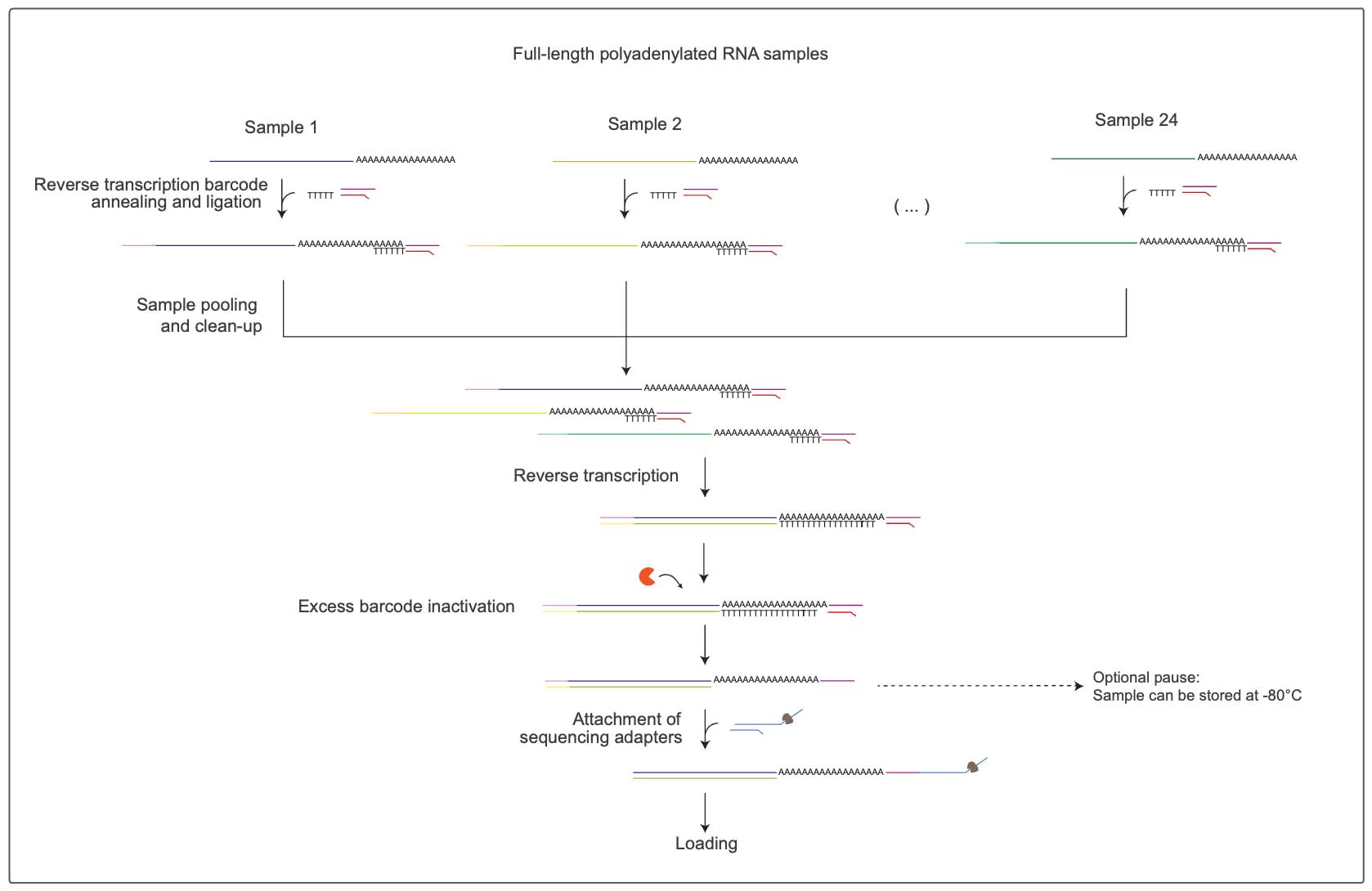
Multiplexing available up to 24 samples
Short-read mRNA-seq
Nanopore cDNA
Nanopore Direct RNA
Sample submission requirements
|
Service |
Sample type |
Minimum amount |
quality |
|
Direct RNA sequencing |
Poly(A)-tailed RNA or total RNA |
≥750 ng poly(A)-RNA or ≥ 2 µg total RNA |
High-quality RNA, RIN ≥7 |
|
Direct RNA Sequencing (Native RNA) |
Poly(A)+ enriched RNA or Poly(A)-tailed IVT RNA |
-
Please provide samples in nuclease-free water.
-
Concentration must be measured by Qubit.
-
The core has the right to determine whether submitted samples are qualified for the experiment.
-
Please check the core ([email protected] or 713-500-7933) for more information.
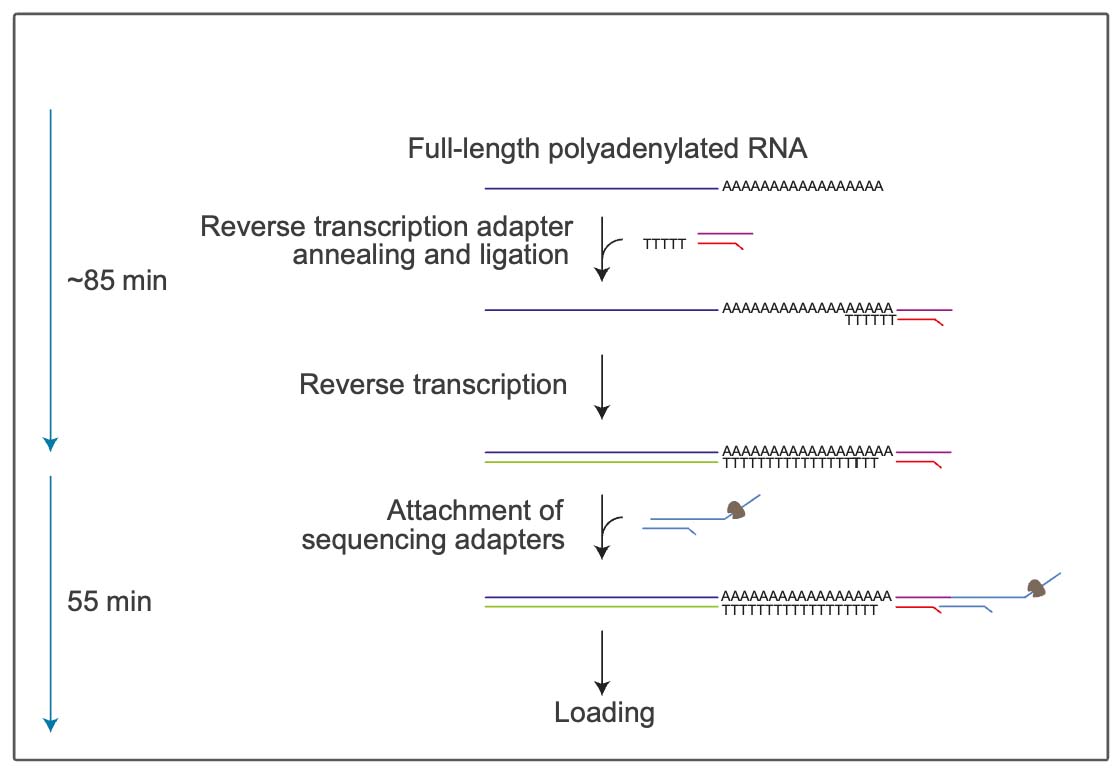
Service workflow
Multiplexing service workflow
Data analysis
Downstream analysis can be performed using EPI2ME workflows designed for direct RNA data or custom bioinformatic pipelines.
Useful documents
- Original protocol:
- Direct RNA sequencing (SQK-RNA004) (PDF).
- https://nanoporetech.com/document/direct-rna-barcoding-sqk-drb004-24