

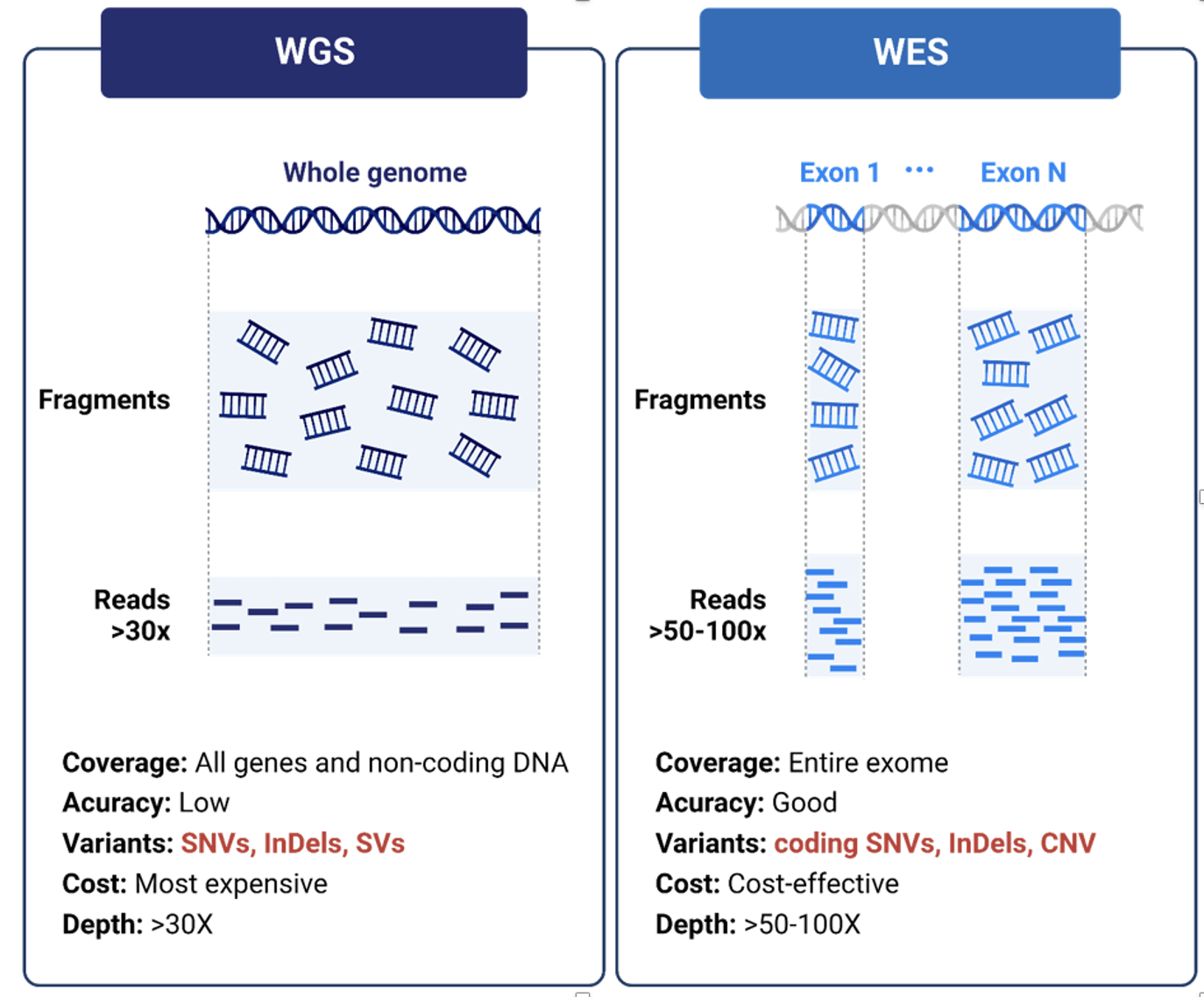
Whole genome sequencing (WGS) is a powerful technique that determines the complete DNA sequence of an organism's genome, including both coding and non-coding regions. By extracting and fragmenting DNA, sequencing machines can read billions of base pairs, which are then computationally assembled into a full genomic map. WGS is widely used in medical research, diagnostics, epidemiology, and evolutionary biology to identify genetic variations, diagnose rare diseases, track pathogens, and support personalized medicine. While it provides comprehensive genetic information, it also involves high costs, large data volumes, and complex analysis. WGS has various applications, including disease diagnosis, personalized medicine, and the study of infectious diseases.
Sample guideline:
| Service | Sample Type | Recommended Amount | Minimum Amount | Minimum Concentration | Quality |
|---|---|---|---|---|---|
| WGS | DNA | 1 µg | 10 ng | 1 ng/µl | OD260/OD230 Ratio around 2 |
- Please provide the DNA in nuclease free water. If any RNase is detected when running DNA chip in our Bioanalyzer 2100, the cost of cleaning up the contamination caused by RNase will be charged.
- Concentration must be measured by Qubit
- The core has the rights to determine if the samples are qualified for the experiment
- Please check the core ([email protected] or 713-500-7933) for more information.
Service workflow:
